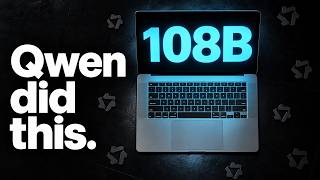
Can A 12.3GB Local 27B Model Beat Claude?
OrcaSAQ2 27B compresses Qwen3.8 to 12.3GB for local AI coding, benchmark claims vs. real agentic work on your 16GB GPU. OrcaRouter's OrcaSAQ2 compresses Qwen3.8-27B from a 54 GB original to a 12.3 GB file, and OrcaRouter reports 70.0 on SWE-bench Verified: a genuine local candidate for small, bounded coding jobs. The maker's own tables mix agent setups. On its Terminal-Bench 2.1 table OrcaSAQ2's 58.4 sits next to Claude Sonnet 4.6 at 58.5 in Claude Code, while the same Sonnet 4.6 scores 51.5 in Terminus 2. Its 93.2% top-choice agreement with the original on WikiText-2 still means about 7 in 100 next-token choices differ, and one different token can send an agent down a different path. 12.3 GB is the download, not the running system. A 16 GB card also needs working memory for the conversation; the architecture supports 262K tokens, the model card suggests about 32K as a practical start, and the official 16 GB preset ships 32K although its published memory pool was measured at 16K. These EXL3 weights need OrcaRouter's vLLM plugin (llama.cpp is not an option, the repository says), and the qwen3_xml tool-call parser: with the wrong parser a file-read request comes back as plain text. The quantization recipe is not disclosed; the serving code is open. Speed: MTP speculative decoding raised one stream from 65.3 to 90.1 tokens per second under a 15.7 GiB cap on an unnamed chip (model card); the kernel repository reports about 111 under a 15.5 GiB cap on a larger card. With eight requests at once, total output fell from 332 to 220 tokens per second in the maker's benchmark. We did not run it. The video outlines a proposed test: one small, repeatable job with visible tool calls, fixed tests and a stopping rule, run against the uncompressed model in the same harness. Don't buy a card for it; it is text-only; keep a frontier service for work outside what you measured. Media credits: Footage: Jiangsu Dalongkai Technology, scrap baler demo https://www.youtube.com/watch?v=AKY1_tie4so Footage: Anthropic, Claude Code launch demo https://www.youtube.com/watch?v=AJpK3YTTKZ4 Stock footage (Pexels): Anil Sharma Product photo: NVIDIA (GeForce RTX 5080 Founders Edition) llama.cpp logo: github.com/ggml-org/llama.brand Chapters: 0:00 Intro 0:53 Results 2:45 Memory 4:27 Software 6:17 Speed 7:57 Agent job 9:29 Worth it 10:31 Conclusion Tools & resources mentioned: - OrcaSAQ2 27B model card (OrcaRouter, Hugging Face): https://huggingface.co/orcarouter/OrcaSAQ-2-27B - OrcaSAQ2-kernel: vLLM plugin, presets and measured serving numbers: https://github.com/Continuum-AI-Corp/OrcaSAQ2-kernel - Official 16 GB preset: https://github.com/Continuum-AI-Corp/OrcaSAQ2-kernel/blob/main/presets/16gb.env - Qwen3.8-27B (base model): https://huggingface.co/Qwen/Qwen3.8-27B - vLLM: https://github.com/vllm-project/vllm - SWE-bench: https://www.swebench.com/SWE-bench/ - Terminal-Bench: https://www.tbench.ai/ About The Stack The Stack helps you build with AI. Each video takes one tool, model, or workflow and shows how it works in a few focused minutes, with the real benchmarks and real costs. We go deep on Claude Code and Cursor for AI coding, AI agents and MCP servers, the open-source AI tools and GitHub repos most people miss, RAG and vector search, fine-tuning, and running local LLMs on your own machine with Ollama and LM Studio. We compare models like ChatGPT and Claude, test AI automation with Zapier, Make, and n8n, and flag the tools that actually ship. Subscribe for new breakdowns: https://www.youtube.com/@the-stack-ai?sub_confirmation=1 #local ai #quantization #qwen 3.8