Thanks Google! I am cancelling my Claude subscription...
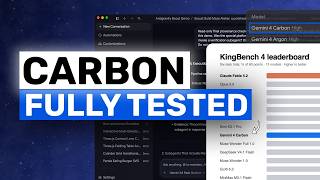
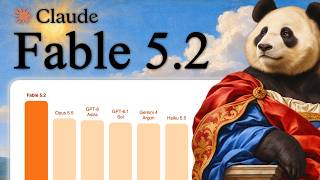
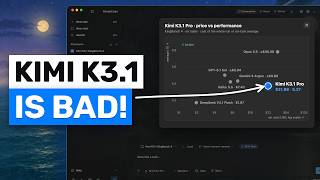
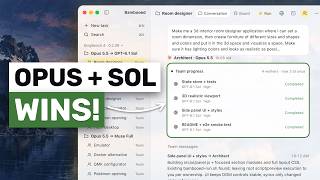
Join this channel to get access to perks: https://www.youtube.com/channel/@aicodeking/join In this video, I'll review Gemini 4 Neon, Google's new mid-tier coding model released on November 18 between Gemini 4 Hydrogen and Gemini 4 Carbon, starting with its quiet rollout, $3 and $15 pricing, 1M context window, four thinking levels, and hands-on behavior in Antigravity CLI. Then I'll run it through all six KingBench 4 one-prompt app builds — a Rust Game Boy, DS, and 3DS emulator, a Go Docker alternative, a 3D room designer, a QMK VIA keyboard configurator, Pokémon Red, and a Rust Fitbit desktop app — showing what actually worked, what broke, and how it landed at #2 out of 18 models for just $20.36. Next, I'll break down its coding habits and blind spots across 108.7 minutes and show how I pair Neon with Hydrogen, Panda Router, and a 9 out of 10 Council gate inside PandaCode, our free open-source multi-agent desktop app. Finally, I'll compare Gemini 4 Neon head-to-head against GPT-6.2 Sol, GPT-6.2 Astra, Claude Opus 5.5, and Claude Fable 5.2 and give my honest verdict on whether it is actually worth using. -- Key Takeaways: 🚀 Gemini 4 Neon launched quietly on November 18 at $3 per million input tokens, $15 output including thinking, and $0.15 automatic cache reads, with no free tier and no November intro discount. 🧠 On paper it offers a unified 1 million token window, 64,000 output tokens per hop, Long Decode up to 1 million, and four thinking levels up to extra high, spending 56% to 81% of output tokens on thinking with zero preamble yapping. 📊 Across the six KingBench 4 builds, Neon scored 4.3 on the Rust emulator, 3.0 on the Go container runtime, 8.5 on the 3D room designer, 6.2 on the QMK configurator, 8.4 on Pokémon Red, and 7.5 on the Fitbit desktop app. 🎯 Neon finishes with 37.9 out of 60 (63.2%), ranking #2 out of 18 models behind only Claude Fable 5.2 (42.0) and beating Claude Opus 5.5 (34.7), GPT-6.2 Astra (33.6), GPT-6.1 Sol (33.0), Argon (32.6), Carbon (32.0), GPT-6.2 Sol (29.6), and Hydrogen (24.9). 💸 The entire six-app run used 27.1 million tokens for $20.36 at list prices, nearly 11 times cheaper than Fable 5.2 ($222) and cheaper than both GPT-6.2 Astra ($27.93) and Carbon ($23.04 on intro pricing). ⚡ Neon averaged 18 minutes per app across 244 steps with zero subagents, writing 201 unique files with only 3 full-file rewrites (compared to Fable's 311) and even inspecting its own rendered screenshots. ⚠️ Its blind spot is coding from training memory and happy-path testing, leaving 7 container symlink escapes, a QMK Factory EEPROM Reset bug that jumps to bootloader (hex 0x0B instead of 0x0A), a dead November 2 Fitbit API, and a cheated level 15 Squirtle test. 👥 Inside PandaCode, Antigravity CLI 1.5.11 ships Gemini 4 Neon and Orchestrator Neon out of the box, letting you pair Neon ($3/$15) with Hydrogen ($1.50/$7.50) workers and Panda Router for low-cost escalation. 🔍 Adding PandaCode's 9 out of 10 Council gate with read-only reviewers on Opus 5.5, Fable, or Astra directly catches those security, API, and byte-code blind spots before anything ships. ✅ Gemini 4 Neon is Google's most worthwhile Gemini 4 release yet and the new #1 price-to-performance coding API model, as long as you verify security and hardware edges and drop to low or medium effort for quick edits.