GLM-5.4 is The Best Open Coding Model Yet! (My Early Access Review)
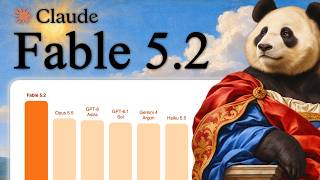
Join this channel to get access to perks: https://www.youtube.com/channel/@aicodeking/join GLM Coding Plan (affiliate link that gives you 10% off, not sponsored): https://z.ai/subscribe?ic=NWKPDIY9WD In this video, I'll review GLM-5.4, Zhipu's new reportedly 700B Mixture-of-Experts coding model, testing it across all four effort tiers — Low, Medium, High, and Max — on both a controlled five-task probe and my full six-app KingBench 4 benchmark suite. First, I'll compare how Low, Medium, High, and Max behave under tight 180-second timeouts versus multi-hour full-stack builds, plus check prompt caching, parallel tool calling, and BigModel's empty-thinking usage accounting quirk. Next, I'll walk through all six KingBench 4 apps — a Rust Game Boy, DS, and 3DS emulator, a Docker alternative, a 3D room designer, a QMK and VIA keyboard configurator, Pokemon Red, and a Tauri Rust Fitbit desktop app — showing where each effort tier shines and where GLM-5.4 lands at #7 out of 19 models as the highest-scoring open model tested yet. Then, I'll break down hands-on engineering behavior, take a balanced look at why OpenAI's GPT-6.2 models are getting roasted online despite GPT-6.2 Sol placing #3 overall, and show how to pair GLM-5.4 with Panda Router and a 9 out of 10 Council gate inside PandaCode before giving my final verdict. -- Key Takeaways: 🚀 GLM-5.4 (reportedly a 700B Mixture-of-Experts model) scores 33.2 out of 60 (55.3%) at Max effort on KingBench 4, landing at #7 out of 19 models and becoming the highest-scoring open-weight coding model tested yet. 📊 That is a 5.7-point jump over GLM-5.3 (27.5), beating Kimi K3.1 Pro (32.2), Muse Wonder Full 1.0 (31.8), DeepSeek V4.1 Flash (31.0), and Qwen 4 Max (30.6), while edging out closed tiers like GPT-6.1 Sol (33.0) and Haiku 5.5 (32.5). 🧠 Effort scaling flips completely between short probes and full apps: Low (25/25 in 66.5s) and Medium (24/25 in 174.6s) win on 180-second tasks where High and Max time out, but on full multi-hour KingBench 4 builds Max (33.2) and High (28.8) pull far ahead of Low (25.2) and Medium (24.1). ⚡ Prompt caching and tool calling are rock-solid across every tier, hitting a 98.4% cache hit rate on KingBench 4 (90% to 92% on warm multi-turn loops) and passing 31 of 31 strict parallel tool schema checks. 💻 GLM-5.4 ships genuinely impressive end-to-end apps, peaking at 7.2 on the WebHID QMK VIA v3 configurator (High), 7.1 on the 3D Room Designer (High, 7.0 Max), 7.0 on the Tauri and Rust Fitbit desktop app (Max, 2.9e-14 analytics accuracy), 6.4 on playable Pokemon Red (Max), and 3.2 on the Rust GB and dual-CPU DS emulator (Max, 153/153 tests, 0 clippy warnings). ⚠️ Remaining growth milestones for open models are clear: symlink containment on untrusted container archives (capped at 3.0 despite High reaching 4.95 raw with 6-namespace Linux isolation), 3DS hardware emulation depth, and live external API migration. 🔍 Online roasting of OpenAI misses real nuance: while GPT-6.2 Astra scored 0.0 on Emulator after downloading third-party binaries, GPT-6.2 Sol places #3 overall at 37.0 (7.9 Room Designer, 5.5 Docker security) and both GPT-6.2 models blocked the symlink escapes that capped Claude Fable 5.2, Gemini 4 Neon, and GLM-5.4 at 3.0. 👥 Inside PandaCode on Zhipu's flat BigModel Coding Plan (28,000 credits per 5 hours, 140,000 per week), use GLM-5.4 Low or Medium for fast everyday tasks and High or Max for heavy builds, paired with Panda Router escalation (Gemini 4 Neon, GPT-6.2 Sol, Opus 5.5, Fable 5.2) and a 9 out of 10 Council gate. ✅ GLM-5.4 is not the #1 overall model yet behind six closed frontier leaders (Claude Fable 5.2 at 42.0, Gemini 4 Neon at 37.9, GPT-6.2 Sol at 37.0, Claude Opus 5.5 at 34.7, GPT-6 Astra at 33.9, and GPT-6.2 Astra at 33.6), but it is an exciting leap forward for open-weight coding models.