OpenAI’s GPT-7 Leaked: 10 Trillion Parameter Massive Leap
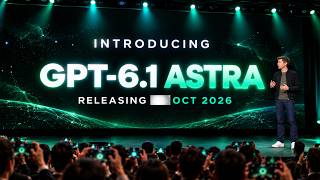
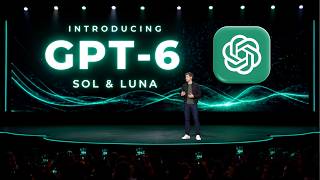
https://bitbiased.ai/ai-automation-services More than 10 trillion parameters. An alleged secret OpenAI pretraining run called “Bel.” And a wave of posts claiming GPT-7 is enormous, nearly finished, possibly AGI-level, and coming before the end of 2026. There’s one major problem: the original leak never says GPT-7. Not once. The entire GPT-7 rumor cycle traces largely back to an August 25, 2026 post from the X account “leo” (@synthwavedd), which claimed OpenAI had completed a massive pretrain codenamed Bel — supposedly the successor to another internal project called Doug. The post described Bel as having more than 10 trillion total parameters and potentially serving as a post-GPT-6 foundation. That is very different from saying OpenAI has a finished 10-trillion-parameter model called GPT-7. OpenAI has filed an intent-to-use US trademark application for “GPT-7,” but a trademark reserves a name; it doesn’t confirm a product, specification, price, or release date. OpenAI’s public documentation currently stops at the GPT-6 family, with GPT-6 Astra beginning its rollout on September 3, 2026. Even Sam Altman’s widely shared “$0 GPT-7” comment is far less significant than it sounds. The line comes from a joking reply from December 2023 — not a GPT-7 announcement or pricing commitment. And that’s where this gets interesting. The 10 trillion parameter claim has been repeated across coverage, but it still traces back to the Bel post. Even if the figure is accurate, “total parameters” doesn’t automatically tell you how expensive or capable a model is. A mixture-of-experts architecture can contain an enormous total parameter count while activating only a fraction for each token. OpenAI also doesn’t publicly disclose parameter counts for models such as GPT-5.6 or GPT-6 Astra. So the viral claim that “GPT-7 has 10 trillion parameters” requires at least two assumptions: that Bel really exists and has the reported size, and that Bel is actually GPT-7. Then the story gets even messier. Claims that GPT-7 is already available, will launch by the end of 2026, will be free, coordinates sub-agents for days, has leaked early-access code, or has been confirmed as AGI all fall apart when traced back to their original sources. Some supposed GPT-7 features appear to be capabilities already associated with GPT-6 Astra. Other screenshots, demos, repositories, and quotes are unsupported, mislabeled, or fake. But Bel can’t simply be dismissed either. The same account reportedly leaked the intermediate GPT-5.5 model in late 2025 before it became known publicly. That gives the source some precedent — but it doesn’t independently verify Bel, Doug, the 10 trillion figure, or any connection to GPT-7. Meanwhile, there are real OpenAI developments worth paying attention to. GPT-5.6 launched on July 10, 2026 in Sol, Terra, and Luna variants alongside ChatGPT Work. OpenAI reported GPT-5.6 Sol scoring 73.5% on ExploitBench, compared with 47.9% for GPT-5.5. Then came GPT-6 Astra. OpenAI reports Astra reaching 98% on FrontierMath, 99.9% on ARC-AGI-3, and 100% on ExploitBench. On OSWorld, Astra reportedly reached 72.6% in roughly 40 minutes versus GPT-5.6 at 65.7% in around 75 minutes. These are OpenAI’s own reported results, not independent verification. Astra’s safety results are equally interesting. On an internal evaluation testing whether a model takes unauthorized actions outside its assigned scope. OpenAI then released GPT-6 Sol and GPT-6 Luna on September 22, followed by GPT-6.1 Sol on September 29. The pattern suggests OpenAI is building a tiered model family spanning frontier performance, lower-cost inference, and increasingly capable agents rather than relying on one flagship model. So what does GPT-6 actually tell us about GPT-7? The clearest trend is toward stronger reasoning and coding, cheaper models, more capable agents, better long-running workflows, and improved alignment evaluations. For now, GPT-7 is best understood as a trademark surrounded by rumors. Bel may be real. It may even contribute to whatever comes after GPT-6. But the jump from an alleged “post-GPT-6 base” to a finished product called GPT-7 is something the internet made — not something OpenAI has confirmed. And this entire story is a useful example of what happens when one unverified leak gets copied, simplified, and eventually repeated as fact. CHAPTERS 00:00 The 10 Trillion Parameter GPT-7 Rumor 01:22 What OpenAI Has Actually Said About GPT-7 02:42 The Bel Leak: What the Post Actually Claimed 04:26 Why “10 Trillion Parameters” Doesn't Mean What People Think 05:31 How One Post Became a Pile of GPT-7 “Facts” 07:33 The Other Leaks People Are Mixing In 09:28 What OpenAI Has Actually Shipped: GPT-6 Astra and the Models Around It 12:03 What GPT-6 Tells Us About Where the Next Model Could Go 13:44 The Safety Numbers Need Context 14:34 The Verdict #openai #gpt7 #gpt6 #gpt6astra #ai