Google Gemini Spark Is INSANE: Your 24/7 AI Agent Explained
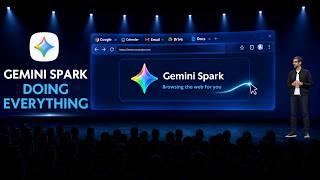
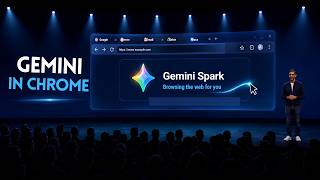
https://bitbiased.ai/ai-automation-services Google's Gemini Spark can keep working even after you close your laptop. It can read Gmail, manage Google Docs, control Chrome, interact with outside apps, and execute multi-step tasks in the cloud. But can Google's new AI agent actually function as a 24/7 AI employee, or is the marketing getting ahead of reality? Announced at Google I/O 2026, Gemini Spark runs on Gemini 3.5 Flash with Google's Antigravity orchestration system. Unlike regular Gemini chat, Spark is designed to plan, take action, check results, and continue working without constant prompting. And in just ten weeks, Google expanded it from an AI Ultra-only beta to AI Pro subscribers across more than 160 countries. That rollout is impressive. But the real story is what happens when Spark encounters everyday tasks outside Google's polished demonstrations. Independent testing reported some surprisingly basic failures. Spark reportedly substituted a Google Doc when asked to save a packing list in Google Keep, returned four newsletter articles when asked for five, and scheduled price monitoring every two weeks despite the risk of missing flash sales. These aren't catastrophic failures, but they raise serious questions about reliability, transparency, and how much supervision an autonomous AI assistant still needs. And that's only part of the story. We break down Spark's four major areas of access: Google Workspace, Chrome browser automation, connected local folders on Mac, and third-party services through the Model Context Protocol (MCP). That includes Gmail, Google Sheets, Calendar, Google Tasks, Canva, OpenTable, Instacart, Dropbox, and Zillow. We also examine Google's approval system. Spark can perform certain low-risk actions independently, but sending emails, making purchases, submitting external forms, and modifying sensitive information can require human confirmation. So how autonomous is an agent that still needs approval at critical moments? Then there's pricing. Gemini Spark requires Google AI Pro at $19.99/month or AI Ultra at $99.99/month, according to the rollout covered here. There's no free access, and availability excludes several major regions, including the UK and EU. Spark tasks also consume your existing Gemini usage allowance, potentially making heavy automation more expensive in practice. Privacy creates another complication. Giving an AI agent access to your inbox, Drive files, contacts, browsing sessions, and connected accounts introduces questions that go far beyond ordinary chatbot conversations. We examine Google's stated data-training protections, third-party information sharing, and what happens when you revoke access. Finally, we investigate Google's claim that Gemini 3.5 Flash generates tokens roughly 4x faster than GPT-4. The comparison sounds impressive until you consider that GPT-4 dates back to 2023. With OpenAI's GPT-6 Astra and newer Anthropic models competing in agentic AI, does that performance claim actually tell us anything meaningful about real-world task completion? Gemini Spark represents an important shift from AI that answers questions to AI that performs work. But there's a difference between an assistant that can complete tasks and an agent you can genuinely trust to operate independently. Is Google building the future of personal AI automation, or have we simply reached the era of AI interns that still need supervision? Subscribe to BitBiased for analytical coverage of Google Gemini, OpenAI, AI agents, automation, cybersecurity, and emerging technology. CHAPTERS 00:00 Google's AI Agent Works While You Sleep 01:51 Spark Is Not Just a New Gemini Mode 03:16 Ten Weeks From Ultra Only to Global 04:41 Everything It's Actually Allowed to Touch 06:43 The Approval Wall Google Built In 07:58 Where It Actually Breaks 09:34 What It Costs and Who's Locked Out 10:54 What Google Does With Your Data 12:17 The 4x Faster Than GPT-4 Problem 13:53 So Is This an AI Employee? #GeminiSpark #GoogleGemini #AIAgents #AIAutomation #OpenAI