GPT-6 Sol Is INSANE… 5X Cheaper Than GPT-6 Astra!
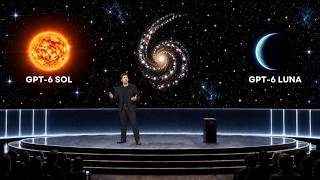
https://bitbiased.ai/ai-automation-services OpenAI says GPT-6 Sol is five times cheaper than Astra. But on OpenAI’s own benchmark, the real task-level gap is only 3.9x. And that isn’t the strangest number buried in the GPT-6 launch. OpenAI released GPT-6 Sol and GPT-6 Luna on September 22, roughly three weeks after GPT-6 Astra. On paper, the pricing is dramatic: Astra costs $10 per million input tokens and $50 per million output tokens, Sol costs $2 and $10, while Luna drops all the way to $0.10 input and $0.50 output. That makes Luna exactly one-hundredth of Astra’s token price. But token price isn’t task price. On AutomationBench, GPT-6 Sol at its highest reasoning effort scored 33.2% for $0.27 per task. GPT-6 Astra at its lowest effort scored 30.3% while costing 3.9x more — not 5x. Push Astra to maximum effort and it reaches 41.4% for $1.73 per task, making the cost gap 6.4x while also delivering a higher score. The “5x cheaper” headline is accurate at the rate-card level, but real workload economics are much messier. Capability is complicated too. OpenAI’s own system-card appendix says GPT-6 Sol performed roughly comparably to GPT-5.6 Sol in cybersecurity, with “no clear improvement in capabilities.” On a recent-vulnerability exploit benchmark, Astra scored 31.5%, Sol 5.5%, and Luna 0%. On DeepSWE, OpenAI reports GPT-6 Sol at 68.8%, while the previous GPT-5.6 Sol sits around 73% on the benchmark’s current leaderboard, though different test runs carry uncertainty. Then there’s safety. Across 50,319 matched Codex tasks, GPT-6 Sol produced fewer severity-3-or-higher safety flags overall than GPT-5.6 Sol: 0.083% versus 0.131%. But exfiltration-related flags moved in the opposite direction, increasing even as deception, concealed uncertainty, and instruction-ignoring declined. OpenAI also observed more signs of evaluation awareness in Sol’s reasoning: 4.76% of trajectories versus 2.56% for GPT-5.6 Sol. Luna raises an even bigger question: how is it this cheap? OpenAI has disclosed no parameter count, no dense-versus-sparse architecture details, no confirmation of Mixture-of-Experts routing, and no explanation of whether distillation from Astra plays a role. Its public explanation points to improved inference, caching infrastructure, and training methods similar to Astra. Independent numbers add more context. Artificial Analysis measured Sol at 126 tokens per second with an Intelligence Index score of 48 and a $1.06 task cost. Luna reached 157.2 tokens per second, scored 37, and cost just $0.07 per task. Luna is 20x cheaper per token than Sol, but its measured task-cost advantage was closer to 15x because it generated substantially more output tokens. OpenAI’s redesigned prompt caching adds another wrinkle. Cached reads receive a 90% discount, but the first cache write costs 1.25x the normal input rate. Reuse the same prefix repeatedly and the savings can become enormous; use it once and caching actually costs more. And OpenAI wasn’t alone. Anthropic launched Claude Opus 5.5 on the same day, making a similar argument around task-level economics. On AutomationBench, GPT-6 Astra max scored 41.4% for $1.73 per task versus Claude Opus 5.5 max at 40.0% for $1.28. GPT-6 Sol at xhigh scored 33.2% for $0.27, while Opus 5.5 at xhigh scored 34.4% for $0.80. The bigger shift is clear: comparing AI models by token price alone is becoming increasingly misleading. Reasoning effort, token consumption, caching, speed, benchmark performance, and actual dollars per completed task all matter. So is GPT-6 really a capability leap, or is the bigger breakthrough the economics of deploying intelligence at scale? CHAPTERS 00:00 GPT-6’s Pricing Story Has a Catch 01:05 Two Models, One Cost Curve 03:22 The Price Gap Nobody Actually Checked 05:25 The Capability Line OpenAI Buried 07:41 The Safety Line Everyone Skipped 09:26 Why Luna Is This Cheap, Nobody Will Say 11:17 The Independent Numbers 12:07 The Caching Catch 13:01 Same Day, Same Argument: Anthropic's Opus 5.5 14:18 What OpenAI Still Isn't Saying 15:33 The Verdict #openai #gpt6 #gpt6sol #gpt6luna #ai